5 September 2026 · 6 min read · By Nowlez Team
Reimagining Litigation with AI: Inside Our Panel with the Rohini Court Bar Association
5 September 2026 — Nowlez Team
On 31 August 2026, around 200 advocates filled the Conference Hall at Rohini Court for an afternoon we had been building towards for weeks: Reimagining Litigation with AI, a panel we hosted together with the Rohini Court Bar Association (RCBA). What was billed as a two-hour discussion quietly turned into something closer to a working demonstration — of what AI can already do inside an Indian litigation practice, and of what advocates still rightly expect it to prove.
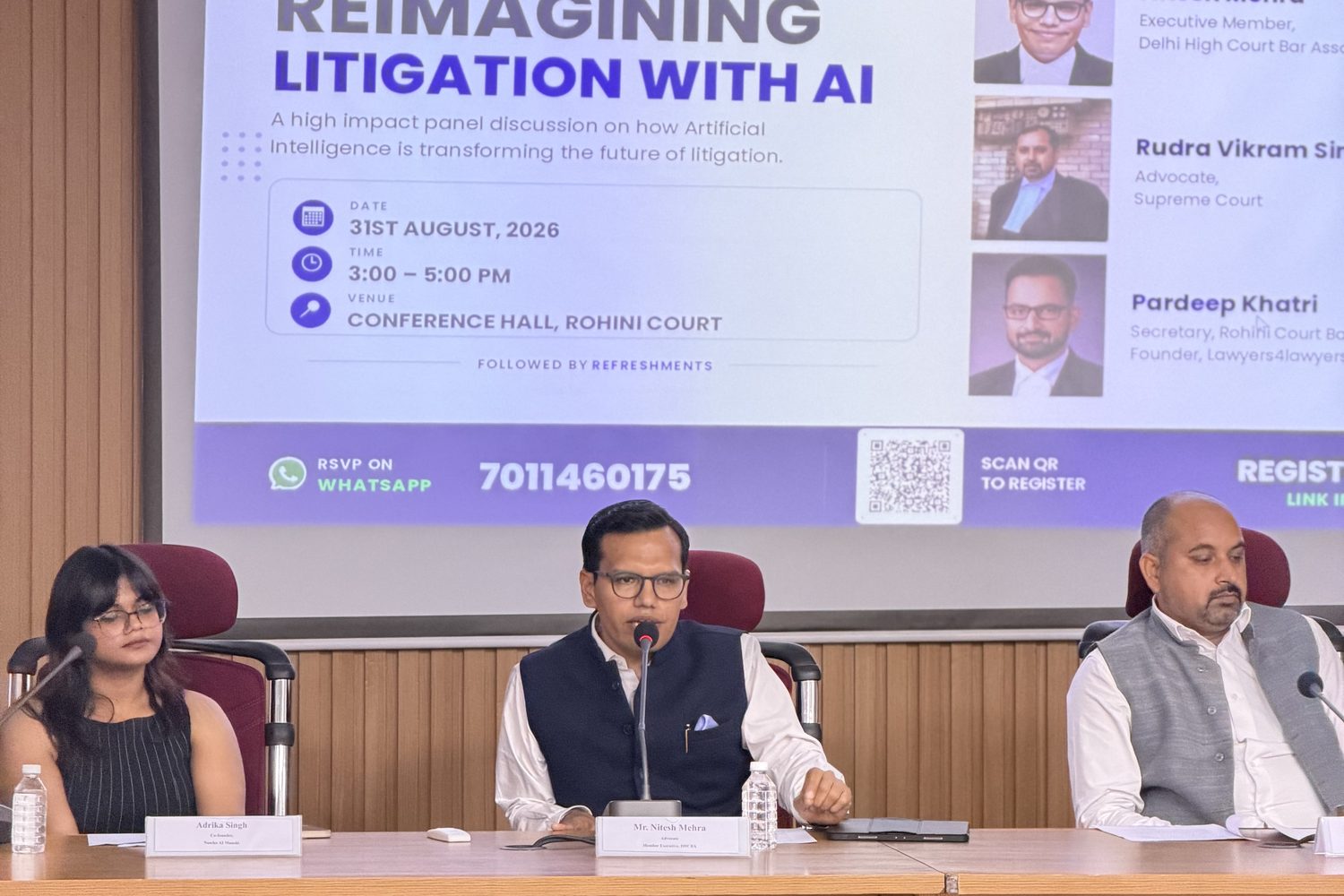
Under way at the Conference Hall, Rohini Court.
Why we did this
Most conversations about AI and the law happen far from the people who file, appear, and argue. We wanted the opposite: to sit inside a bar association, with practising litigators, and ask the uncomfortable questions in the open. The RCBA — and its President, Mr Rajeev Tehlan — met us more than halfway, encouraging members to learn the technology and adapt it to ease their work rather than fear it.
An interactive panel, not a lecture
Our co-founder Adrika Singh moderated a deliberately interactive session, putting six questions to the panel — Mr Nitesh Mehra (Executive Member, Delhi High Court Bar Association) and Mr Rudra Vikram Singh (Advocate, Supreme Court):
- How is AI changing the day-to-day practice of litigation, especially in managing cases?
- What can AI realistically automate, and where does human legal judgment remain indispensable?
- As AI does more research and drafting, how should advocates verify citations?
- What are the concerns around client-data confidentiality, ethics, and accountability?
- With AI taking over administrative work, how does the role of the traditional munshi evolve?
- Five years out — how does AI reshape litigation, and what skills will advocates need?
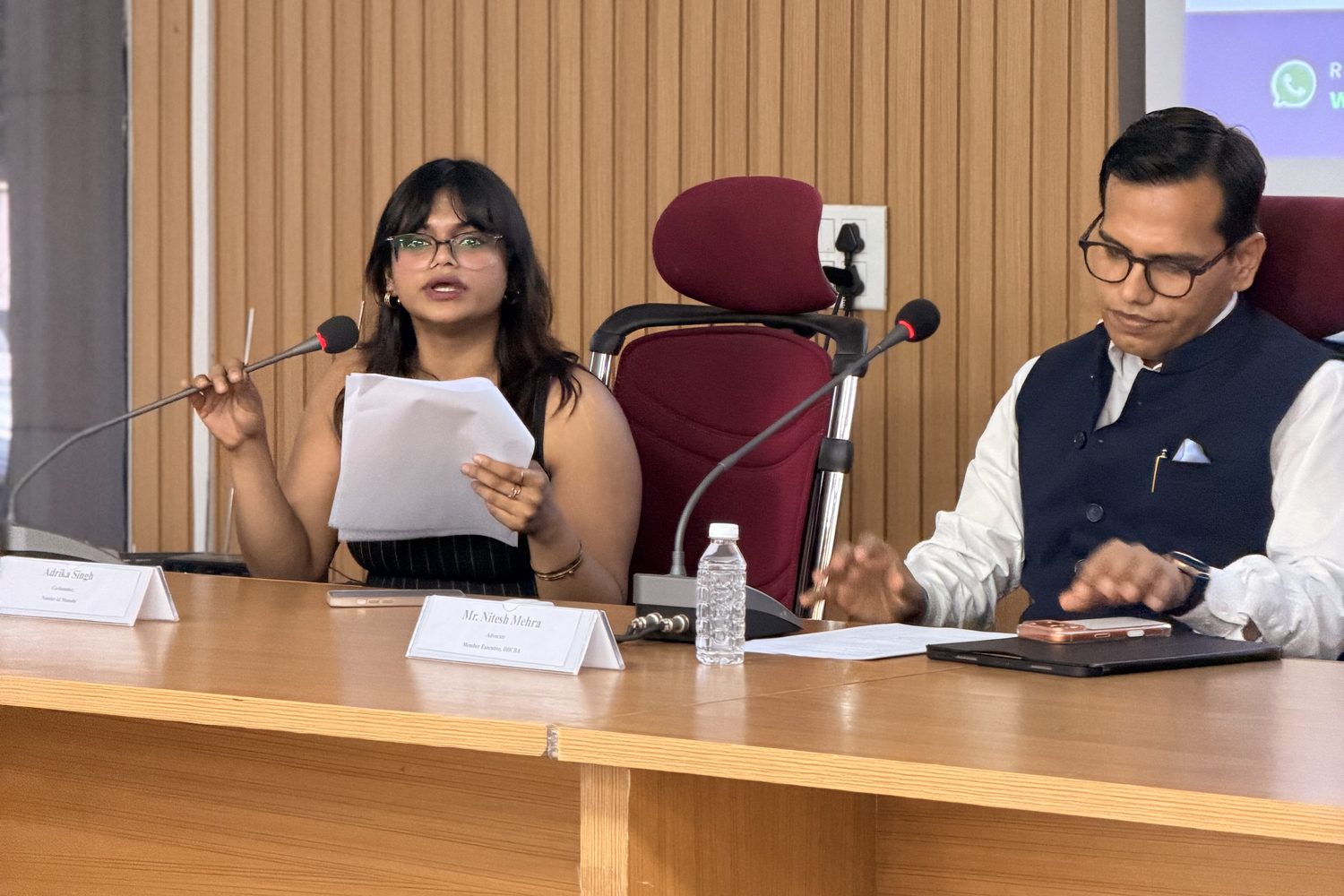
Co-founder Adrika Singh moderating the discussion.
What the panel actually said
Mr Nitesh Mehra spoke as a daily user, not a spectator. He already runs much of his practice on Nowlez AI Munshi — pulling his cause-list every morning, tracking orders, and using AI for research. He is also thinking about the rules of the road, having taken up with a Supreme Court committee the idea of recording consent to use AI through the vakalatnama, so advocates are not penalised for adopting it, and he is closely engaged with how AI regulation should be framed. He was practical about tools, too, laying out what an advocate should check before buying any AI product — and why "free" can be expensive once you ask where your clients' data goes.
Mr Rudra Vikram Singh pressed on judgment and guardrails. AI, in his telling, is a formidable research and document-management assistant — but the advocate's judgment is not for outsourcing. He traced how quickly these tools have evolved, offered a view of where they are heading, and returned to the line every practitioner has to hold: rely on AI for leverage, never for the decision.
On citations, the panel was blunt. Courts elsewhere have already embarrassed lawyers who filed AI-invented authorities; the fix is not to avoid AI but to verify every citation, every time.
On data privacy and ethical AI
Adrika used the moderator's chair to make a point we care about deeply: advocates handle privileged, sensitive information, and most general-purpose AI tools were never built for that. She walked the room through how to buy AI as an informed advocate, and why Nowlez AI Munshi is built privacy-first — running on our own models, trained on millions of Indian court orders and judgments, with no third-party APIs and no client data leaving for foreign models.
The floor opens
The best part of any bar event is the floor, and this was no exception. Advocates asked hard, specific questions about using AI in their own practice — and the panel stayed until those questions were answered.
And then we ran it live
To close, our co-founder Rithik Chaudhary put Nowlez AI Munshi on the projector and role-played a day in the life of an advocate — entirely over WhatsApp.
It started with a voice note: "What are my cases for today?" Munshi replied — out loud — with the day's matters, listed across courts around the country. He asked it to pull the latest orders in the cases he was appearing in, and it returned the actual order PDFs. He asked for a case brief to hand a senior, and it produced one as an MS Word document. Then the heavy lift: draft a reply to the written submissions — and Munshi drafted the full reply in the court-specific format, with the correct jurisdiction.
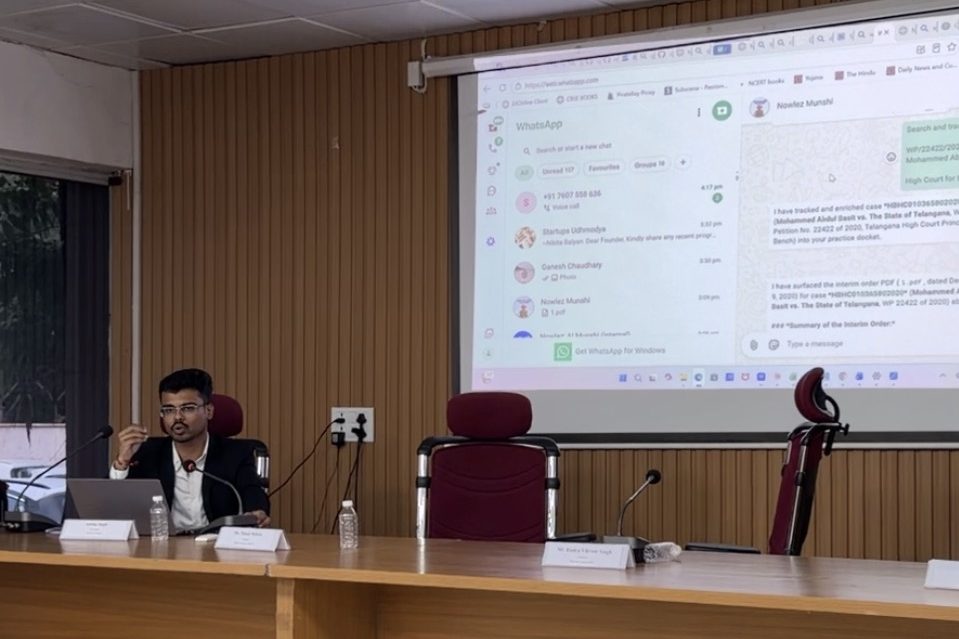
Nowlez AI Munshi on the big screen — tracking a live High Court matter and surfacing its interim order, over WhatsApp.
The room did what we hoped it might: it reached for its phones. For a few electric minutes, around 200 advocates were running Nowlez AI Munshi at the same time, trying the same steps on their own cases. (We will admit we were watching our servers closely. They held.) By the time we wrapped, there was a queue at the registration desk of people wanting to get onboarded on the spot.
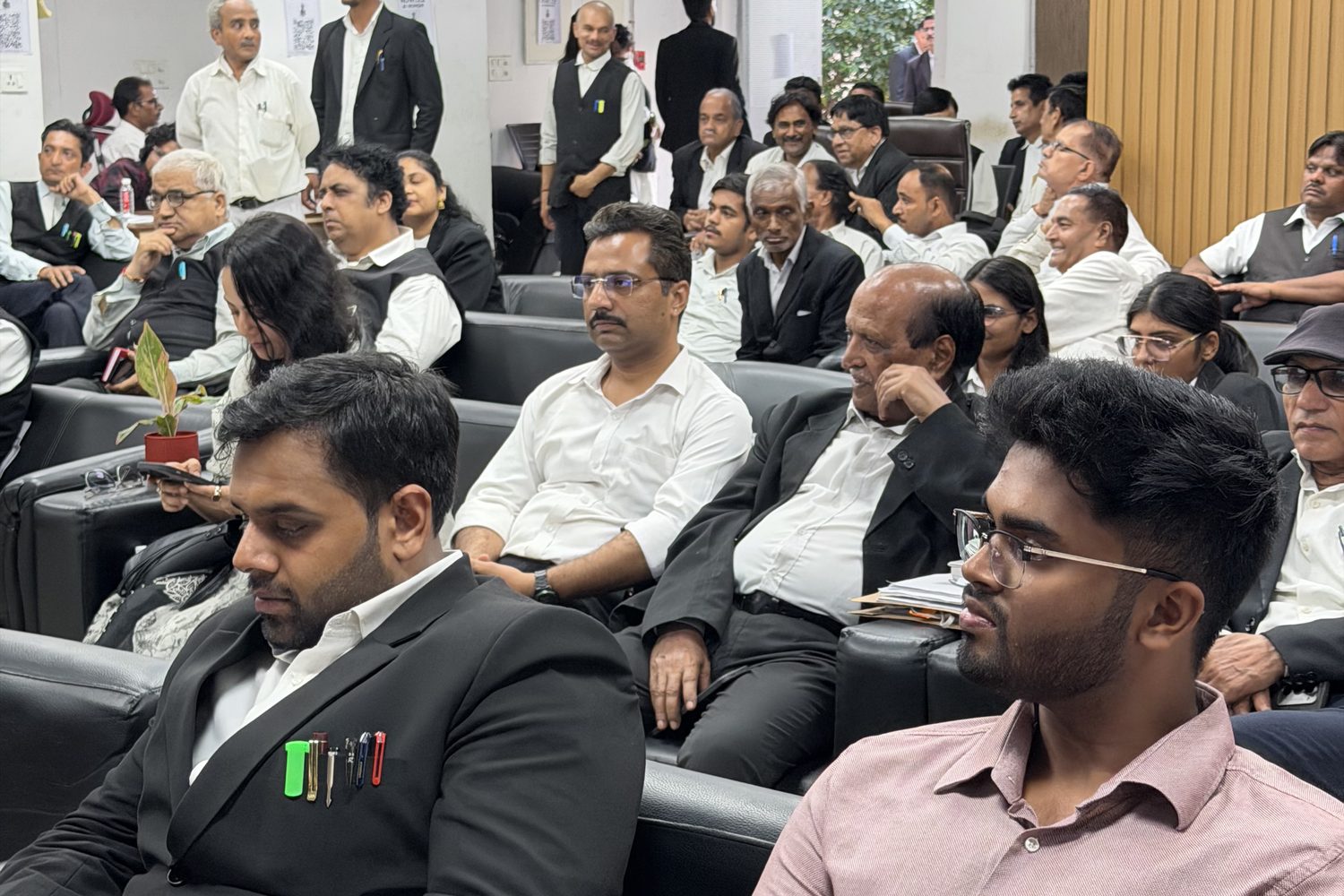
A full house — around 200 advocates at Rohini Court.
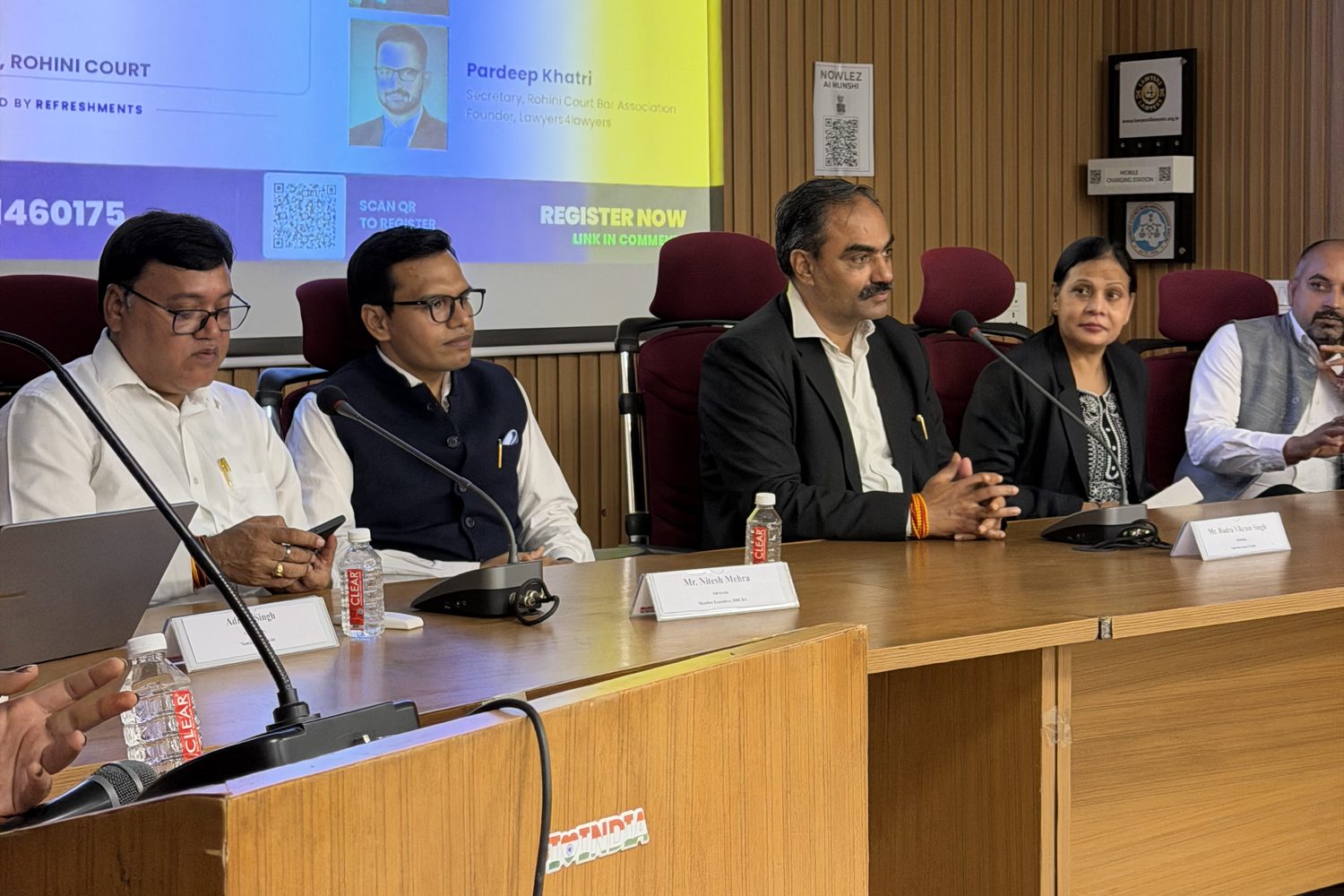
The panel, with RCBA committee members who made the afternoon possible.
What it means for advocates
The takeaway was not "AI will replace advocates." It was subtler and more useful: the routine, time-eating parts of litigation — tracking, cause-lists, order retrieval, first drafts — are ready to be handed off, if the tool respects confidentiality and the advocate keeps verifying. The judgment, the strategy, and the appearance remain yours. The munshi isn't disappearing; it's being reimagined.
Try it yourself
Nowlez AI Munshi works where you already do — on WhatsApp — across the Supreme Court, High Courts, District Courts, and tribunals, and it's included in Nowlez plans. If you were in the room, thank you. If you weren't, see the event recap, or start with Nowlez and run your own "day in the life."
With gratitude to the Rohini Court Bar Association, its President Mr Rajeev Tehlan, its committee members, and our panellists Mr Nitesh Mehra and Mr Rudra Vikram Singh.